
Society of Suspects How to Survive as Society
Stay alive through blackouts and walk into gatherings with receipts.
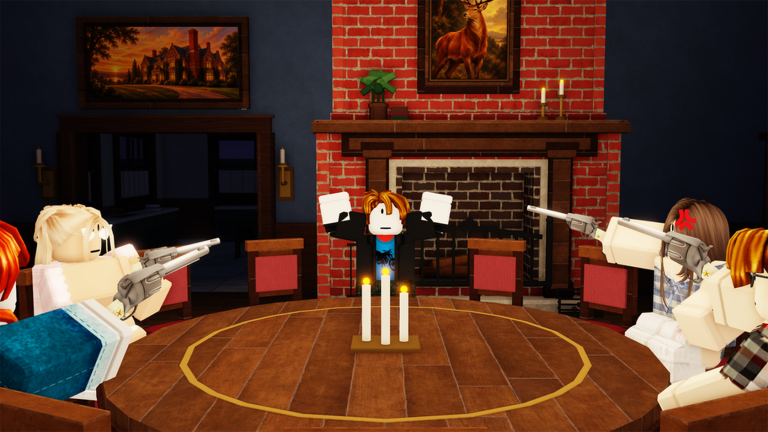
Your job as an innocent
When you are not the murderer in Society of Suspects, you play for the Society: survive lights-out windows, gather clean evidence, and help the lobby aim revolvers at the real threat. Public lobbies cap near fourteen players, so chaos is normal. Survival is not only avoiding the knife — it is still being a credible witness when the chandelier flickers back on.
This guide assumes you already know the loop from Getting Started. We focus on habits that keep Society members alive and persuasive.
Pre-blackout positioning
Pick social spaces with exits
Dead-end bedrooms look cozy and play like traps. Favor rooms with two exits or busy hall junctions. You want witnesses and escape vectors.
Form a soft buddy pair
Agree — even silently — to keep roughly the same wing. Soft buddies glance back every few seconds. Hard buddies who never look away become a single target package when the murderer is patient.
Seed your alibi early
Mention where you plan to check (“sweeping parlor then kitchen”) so later claims match earlier chat. Over-explaining is suspicious; one clear intention is enough.
During lights out
Darkness is the murderer’s strike window. Your goals, ranked:
- Do not die alone. Drift toward your buddy’s last known footsteps.
- Collect sensory notes. Footstep direction, door sounds, sudden silence.
- Avoid panic sprinting into unknown rooms where you can be isolated.
- Stay off the keyboard unless you must warn about a chase you can prove.
If you hear a struggle far away, do not ego-peek every corridor. Living witnesses win rounds; dead heroes write no alibis.
Watch the live round embed on this page for how survivors narrate after blackouts — tone matters as much as content.
Lights return — the thirty-second audit
Run this script every time:
- Count survivors in your vision.
- Ping your buddy: still here?
- Note who emerges from impossible angles relative to their last claim.
- Write (mentally or in chat) a three-part line: where I was / who I saw / who I did not see.
- Compare with one other Archivist-type player (see archetypes on Players).
This audit feeds S-tier skills on the Tier List: observation and alibi tracking.
Sounding trustworthy without sounding scripted
- Prefer short specifics over essays.
- Repeat others’ claims accurately before amending them — it shows you listen.
- Admit uncertainty (“confidence medium”) instead of fake certainty.
- Do not stack onto a name just because chat is loud; add a new fact or stay quiet.
- Save prosecutor energy for Voting Tips moments when evidence chains actually connect.
Buddy system failure modes
Buddy play is A-tier, not magic:
- Murderer buddy — if your partner always “loses you” right before deaths, re-evaluate.
- Tunnel vision — two innocents staring at each other miss the third silhouette.
- Split for loot/cosmetics — if the experience adds pickups later, agree on meeting points first (Updates will flag such changes).
When you are accused
Stay calm. Restate your path with room names. Offer a witness. Ask the accuser for their path. If you panic-type walls of text, you look guilty even when pure. Role tells and counter-tells are expanded on Roles.
If the lobby still lines up wrongly, take the lesson into the next round rather than flaming — toxicity makes future alibis harder to hear.
Advanced survival patterns
Cross-pair verification
Two buddy pairs exchange one fact each after blackouts. Murderers struggle to fake four coordinated timelines.
Anchor objects
Stand near unique props (statue, staircase landing) that others remember visually. “I was at the staircase” is stickier than “I was somewhere upstairs.”
Controlled absence
Sometimes leaving a crowded room is safe if you announce it and take a witness. Unannounced absences during tense phases look like setup.
Mid-game reset
If discussion stalls, propose a structured recap: deaths in order, last confirmed pairs, open questions. Structure is a Society weapon.
What not to do
- Do not bait the murderer alone “for content.”
- Do not pretend you have ESP — and never install it (Scripts).
- Do not ignore Codes scams between rounds; stolen accounts end your climb.
- Do not copy murderer guides into innocent chat mid-round; teach after the revolver resolves.
Practice drills
- Three-fact drill: after each blackout, force three facts before accusing.
- Mute sprint: one round where you only move and listen during darkness.
- Witness ladder: try to always have one named witness by the time Society gathers.
- Compare your notes with the Murderer Guide offline so you recognize pressure patterns.
Link out when you need more
- Voting Tips — converting survival into correct shots.
- Guides Hub — full index.
- Wiki — durable facts.
- Links — official play URL if friends need the real place.
Survive the dark, speak in evidence, and make the mansion remember you as the player who kept the Society coherent when the lights came back.
Frequently Asked Questions
Quick answers to the most common questions.
What is the best way to survive lights out?
Stay near a soft buddy, listen for footsteps, avoid dead ends, and skip panic chat until you have a sensory note worth sharing.
How do I make a good alibi?
State where you were, who you saw, and who you did not see, with room-level specifics and honest confidence.
Should innocents always travel in pairs?
Soft pairs help, but verify partners after each blackout and cross-check with other pairs so a murderer buddy cannot isolate you.
What if the lobby accuses me wrongly?
Restate your path calmly, cite a witness, ask for their route, and carry lessons to the next round instead of flaming.